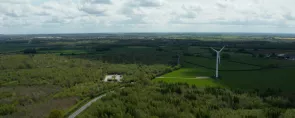
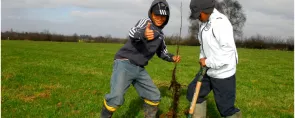
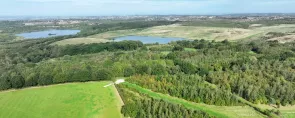
Since planting began over thirty years ago, the National Forest has transformed from a patchwork of fields and former industrial land into a connected landscape of woodland, meadow, and wetland. More than 10 million trees now grow here, forming the backbone of a living system that captures carbon, filters air and water, and provides homes for wildlife from the smallest beetles to the tawny owl.
In summer, each tree reaches the peak of its productivity. Through photosynthesis, leaves capture sunlight and use it to convert carbon dioxide and water into sugars. These sugars fuel growth and repair, allowing branches to lengthen and trunks to thicken. At the same time, the trees release oxygen, a quiet exchange that fills the forest air with freshness and sustains the life around them.
The canopy above creates a shifting world of light and shade. Beneath it, cooler and more humid conditions support ferns, mosses, and shade-tolerant plants such as dog’s mercury and wood sorrel. Many woodland flowers that bloomed in spring have now completed their life cycles, their energy stored underground until the following year. In their place, the understorey thickens with shrubs like hazel, hawthorn, and elder, providing food and shelter for nesting birds and young mammals.
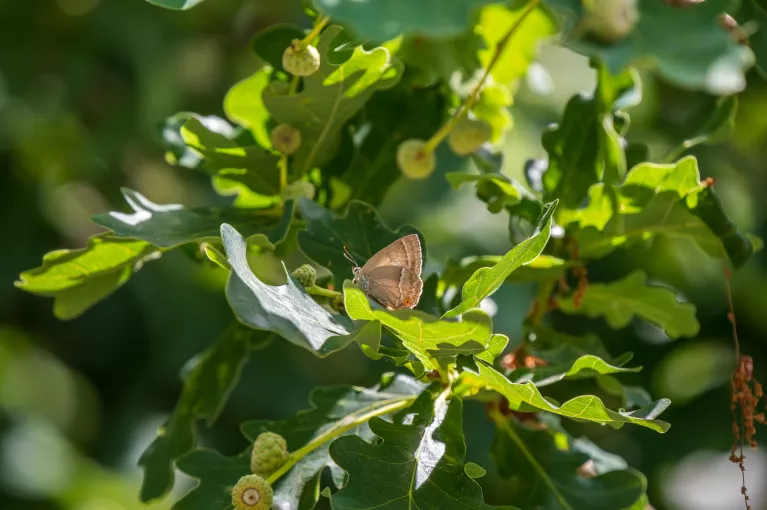
Summer is also the busiest season for wildlife. Insects flourish in the warmth, pollinating plants and forming an essential part of the food chain. Butterflies such as the speckled wood and ringlet dance through glades of dappled light, while bees and hoverflies visit bramble flowers heavy with nectar. Birds raise their young among the leaves, and bats take to the dusk skies, hunting along woodland edges and watercourses.
The trees themselves work constantly to balance growth and protection. On hot days, they draw large quantities of water from the soil, transporting it through their trunks to cool the leaves and replace what is lost through transpiration. A mature oak can release hundreds of litres of water into the air each day, helping to regulate the local climate. When conditions turn dry, trees respond by closing tiny pores on their leaves, conserving water until the rains return.
This steady cycle of energy and renewal sustains not only the forest ecosystem but also the people who live, work, and visit here. Woodland paths offer cool shade from the summer heat, and the hum of insects and rustle of leaves remind visitors of the complex web of life that thrives in this restored landscape. Each walk through the Forest in summer is a glimpse of what decades of care and collaboration can achieve, a living example of how nature, when given space and time, flourishes.
The height of summer marks the forest’s moment of greatest abundance, but it also carries within it the first hints of change. As daylight begins to shorten once again, the trees will soon shift from growth to preparation, drawing on the strength built in these warm months to face the seasons ahead.