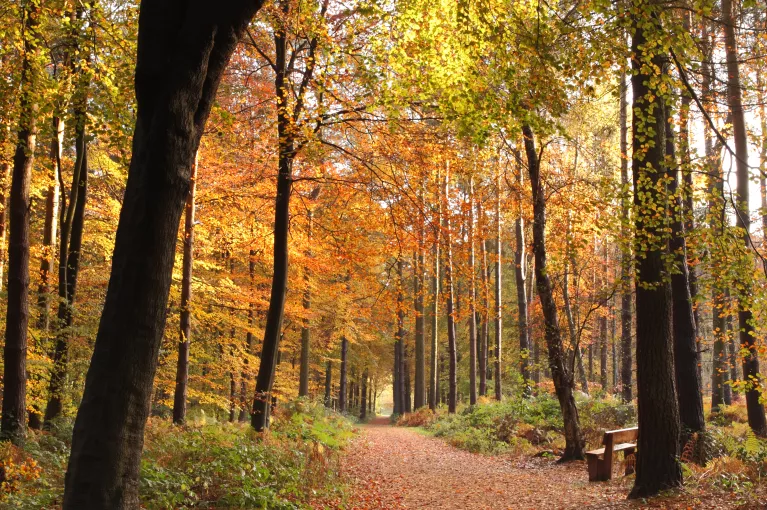
More than 10 million trees now shape the National Forest, their presence the result of over three decades of planting and restoration. Native species such as oak (Quercus robur), silver birch (Betula pendula), field maple (Acer campestre), rowan (Sorbus aucuparia) and hazel (Corylus avellana) bring distinctive hues to the landscape at this time of year. Together they form a tapestry of colour that defines the Midlands countryside each autumn.
The changes that fill the Forest with colour are part of a finely tuned process known as senescence, the natural ageing of leaves as trees reclaim valuable nutrients before winter. As chlorophyll breaks down, it reveals pigments that have been present all along: the yellows of carotenoids and the reds and purples of anthocyanins. These pigments protect the leaves during their final days, shielding cells from excess light and helping the tree recover essential nutrients such as nitrogen and phosphorus.
Once this process is complete, the trees begin to shed their leaves through abscission. Specialised cells form at the base of each leaf stalk, weakening the connection until the leaf falls away safely. This shedding helps the tree conserve water and energy through the cold months to come, while the fallen leaves form a rich layer of litter on the forest floor. There they are broken down by fungi, bacteria, and invertebrates, returning nutrients to the soil and supporting the cycle of life that sustains the woodland.
Autumn is also a season of plenty for wildlife. Trees and shrubs are heavy with fruit and seed, providing food for birds, mammals, and insects preparing for winter. Oaks drop acorns that sustain jays and squirrels; rowan trees glow with red berries, attracting thrushes and blackbirds; and hazel branches bear clusters of ripening nuts. This abundance ensures that much of the Forest’s wildlife can feed and store energy before the leaner months ahead.
Beneath the surface, roots remain active, anchoring the trees and absorbing water while storing sugars produced over summer. Fungi, many of which appear above ground as toadstools at this time of year, play a vital role by forming symbiotic partnerships with tree roots. These mycorrhizal networks help trees access nutrients such as phosphorus and nitrogen while receiving sugars in return, a quiet exchange that supports the health of the entire woodland.
For people, autumn in the National Forest offers a moment to pause and reflect. Paths are lined with fallen leaves, the air carries the scent of damp earth, and the landscape seems both vibrant and restful. It is a season that shows the Forest at its most colourful and yet its most contemplative, a reminder that change is constant and that renewal always follows.
As the last leaves fall and daylight shortens, the trees enter dormancy once more, drawing on the reserves they have built through spring and summer. The cycle will begin again soon enough, when the sleeping giants wake to another spring.