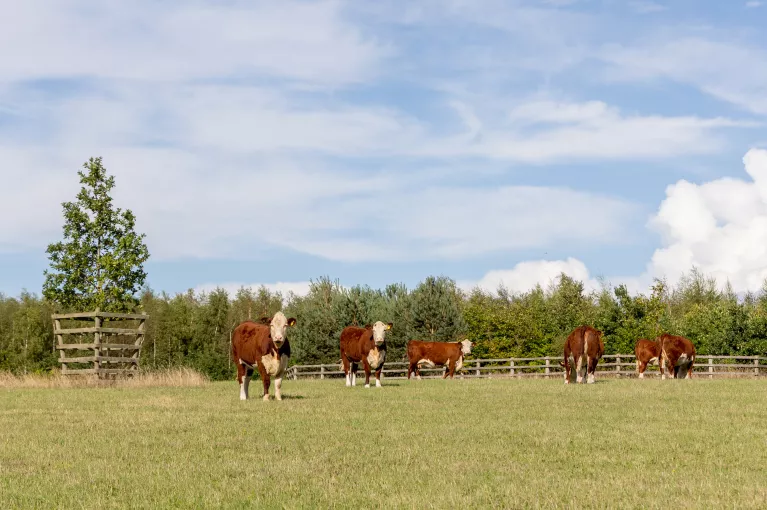
The growth of the National Forest is not just about planting more trees. It is guided by the principle of placing the right tree in the right place and is driven by the vision and enthusiasm of local farmers and landowners. By carefully considering location, species and purpose, trees can clean the air and water, slow surface runoff, provide habitats for wildlife, and enhance the landscape, while supporting productive farming, tourism, recreation and long-term business opportunities.
A distinctive feature of the Forest’s success has been the ripple effect of peer influence. When farmers see what their neighbours are doing, it sparks ideas for their own land. This peer-to-peer inspiration, supported by conversations, shared experiences and practical demonstrations, has been vital in building confidence and encouraging participation. Farmers are discovering that planting trees does not detract from agricultural use. Instead, it improves soil and water management, creates more resilient farmland, and enhances the character of their landscape.
Charles Robinson, founder of Robinson Forestry, works closely with farmers and landowners across the region, designing and managing planting schemes that turn ideas into thriving woodland. His work has been instrumental in enhancing the ripple effect seen across the Forest, where one successful project has inspired neighbouring farms to get involved.
One early example was Jonathan Thompstone, who planted parkland trees and woodland on his former dairy farm near Burton. “We wanted to turn grazing grass fields back into parkland and create more variety for wildlife,” Jonathan explains. “Tree planting is the right thing environmentally, and the woodland has become a valuable amenity for people and wildlife alike.”
His project inspired neighbouring landowners, including George Thompson, who quickly followed suit. “The scheme was designed, approved and planted within a month,” George recalls. “Charles handled everything, and the National Forest grant covered fencing, gates, tree planting and ongoing maintenance. It’s a win-win for everyone.”
Parkland crates, used to protect new trees, have also been a visible catalyst for change. Their presence in the landscape provides a short-term but striking feature, giving structure to fields and restoring the character of lost wood pasture, while offering a practical way to integrate new trees into working farms.
Richard Ward of Poplars Farm was watching closely and was inspired to integrate trees into his cross-country equestrian course, creating a multi-functional landscape while improving biodiversity. “In a few years this will be quite a decent forest, a lot more interesting to ride through whether you’re on horseback or carriage driving,” Richard says.
Terry Harvey and other local farmers have now also planted trees, inspired both by the support from the National Forest team and the enthusiasm of neighbouring landowners. “We just like trees,” Terry says. “It’s important for the future and a nice legacy to think that someone else will benefit from that.”
For many landowners, the grants have been a crucial enabler. Covering design, planting, fencing and maintenance, they make tree planting accessible and cost-effective, while ensuring projects are delivered to a high standard. Beyond the financial support, farmers emphasise the operational and environmental benefits: better soil health, more diverse habitats, natural screening, improved animal welfare and stronger landscape resilience.
Charles sums up the ripple effect: “When one farm sees the benefits of new woodland, neighbouring landowners often get involved. The effect spreads quickly, one successful scheme inspires others, creating clusters of trees that enhance the landscape.”
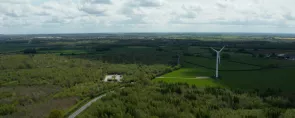
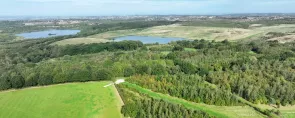
Today, the National Forest is a mosaic of thriving woodlands, parkland trees and shelter belts, woven seamlessly into the landscape. It continues to grow, supported by dedicated landowners with guidance from the National Forest team, ensuring that the Forest remains healthy, accessible and beautiful.
“Whatever the reason you’re looking to plant trees, we’re here to help,” says Rob Cleaver, woodland creation manager at the Forest. “We want to continue to work with people to grow the Forest, leaving a lasting legacy that ensures a more sustainable future for everyone.”
So far, we have planted 10 million trees in the National Forest. If you want to part of growing a greener future but don’t own land, you can still support this work by making a donation or helping us create more woodlands by dedicating a tree.