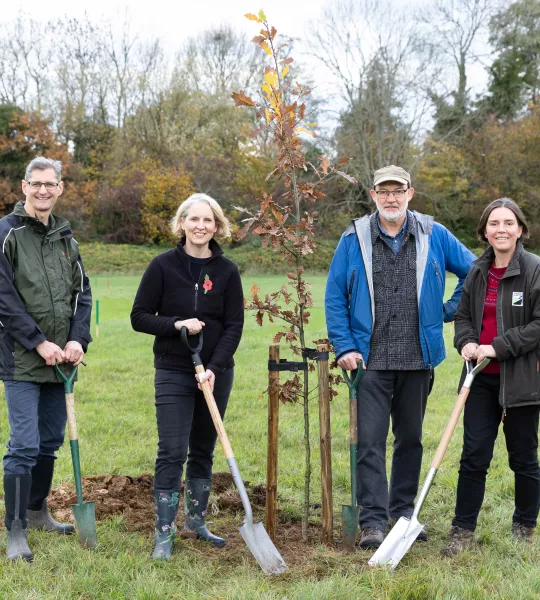
Agroforestry combines trees with farming to create more resilient, productive, and profitable land. It’s a practical approach that works with nature - helping farms thrive while restoring wildlife, improving soils, and capturing carbon.
At the National Forest, transformation is at the heart of everything we do. Agroforestry is about transforming land into something more resilient, more connected, and more valuable for future generations.
What Is Agroforestry?
Agroforestry combines trees and farming within the same landscape. Rather than separating agriculture and forestry, it brings them together to deliver multiple benefits from the same piece of land.
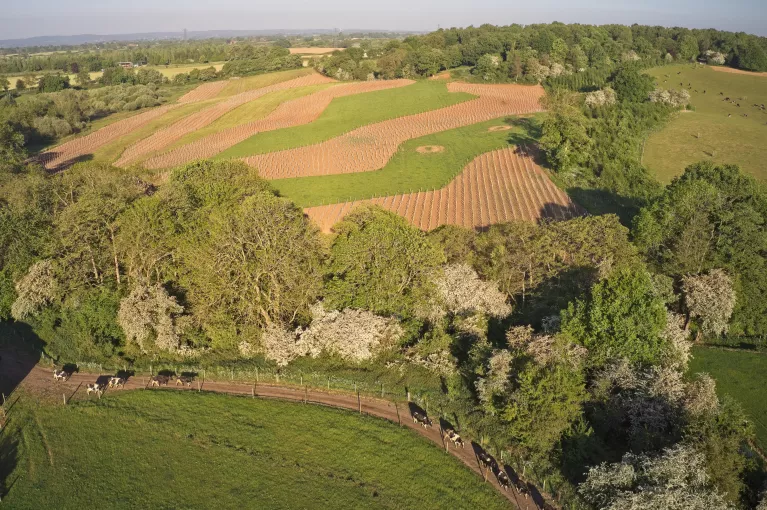
This can include woodland creation, scattered trees in grazing systems, trees within arable fields, or strengthened hedgerow networks. Agroforestry helps future-proof land by improving soil health, supporting biodiversity, strengthening water management and increasing long-term productivity to help future-proof your land against problems yet to come.
There are many different approaches to agroforestry, each suited to different landscapes, farming systems and objectives. Below, we explore the main types of agroforestry and how they can be applied in practice.